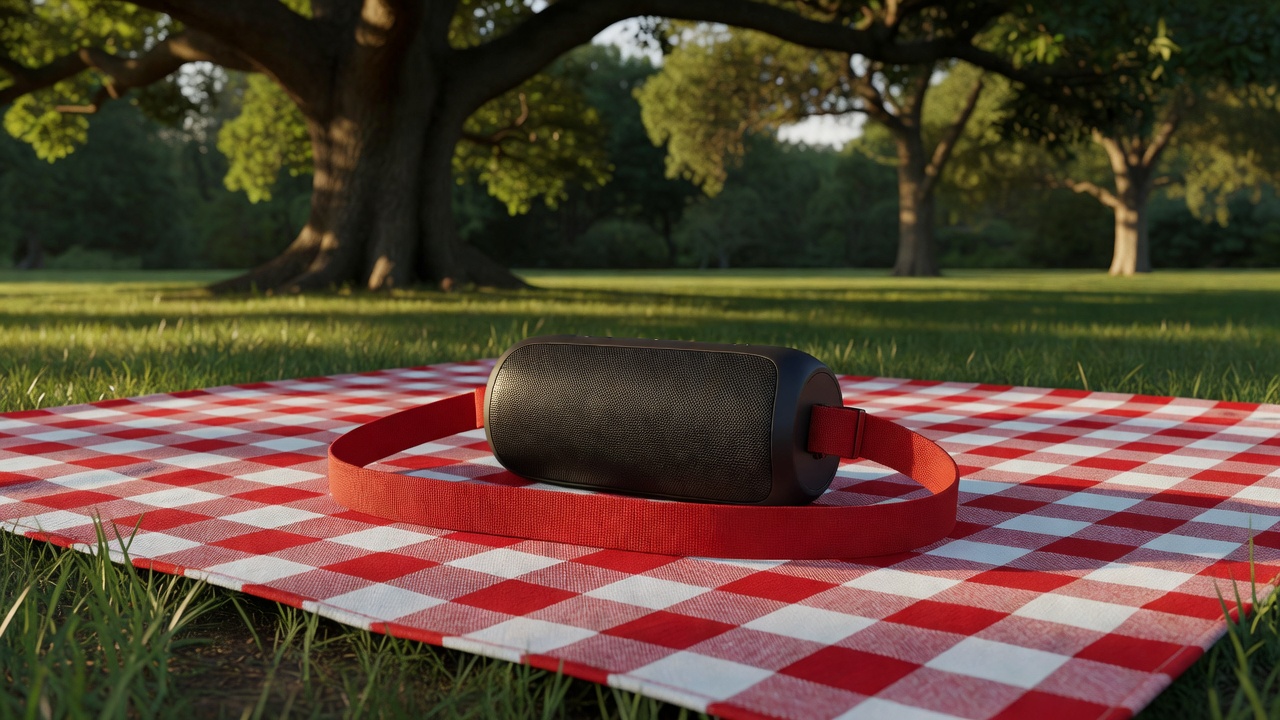
Permission before pairing
Check the rules for the exact place you plan to sit. A public park is not automatically an amplified-music venue, and a countryside picnic spot may be within a protected area or on private land. Local restrictions, event conditions and instructions from staff take priority over any listening plan.
Look for current information from the relevant authority, whether that is The Royal Parks, the National Park Service or a local council. These organisations manage different places under different rules; none provides a universal permission slip. If the guidance is unclear, ask or leave the speaker packed. Wildlife, quiet recreation and nearby visitors are good reasons to choose silence even where music is technically allowed.
Choose a small listening circle
A compact speaker can be enough for a few people sitting close together. Prioritise clear, comfortable sound at low volume, straightforward controls and a battery you have actually tested. Product descriptions about maximum output do not tell you how considerate the speaker will be on a shared lawn.
One familiar speaker usually creates fewer problems than an improvised multi-speaker setup. Stereo pairing and party modes may require compatible models or manufacturer-specific apps. They can also spread sound beyond your group. If personal listening is the better choice, use headphones at a comfortable level and remain aware of paths, cyclists, water and other hazards. Headphones do not remove the need for situational awareness.
Move it closer, not louder
Place the speaker near the listeners on a stable, dry surface. Keep it away from the edge of a table, foot traffic and loose picnic items that could rattle. Avoid blocking its drivers or vents with clothing. Follow the manufacturer’s advice on orientation rather than assuming every speaker projects sound the same way.
Use conversation as an immediate practical check: people should not need to raise their voices. Walk a little beyond the blanket and listen for how far the sound carries. This is a courtesy check, not a scientific hearing-safety measurement. Wind direction and terrain change what others hear. Lower the volume or stop if the sound is intruding, and do not try to overpower waves or a noisy neighbouring group.
Budget for the whole outing
Charge the phone and speaker before departure. Advertised battery life depends on test conditions and may differ with volume, temperature, battery age and enabled features. Your own recent experience at a similar listening level is more useful than assuming the maximum claim will hold.
Pack a compatible cable and, if useful, a suitable power bank. Check the connectors at both ends; a cable that fits the phone may not fit the speaker or power source. Use equipment in good condition and follow charging guidance. Do not charge wet devices, leave batteries baking in direct sun or bury charging equipment beneath insulating blankets. Preserve phone power for the journey and important communication before using it to extend the music.
Read resistance claims carefully
An IP rating is not a promise that a speaker can handle every outdoor condition. IEC 60529 defines enclosure protection classifications, but a product’s specific rating and manufacturer instructions determine what has been tested. Water resistance does not automatically mean resistance to salt water, sand, impact or every form of exposure.
Keep the kit away from splashes, wet grass and drifting sand whenever possible. Close protective port covers as instructed and keep devices shaded with adequate ventilation. If equipment gets wet, stop and follow the manufacturer’s drying and care guidance before charging. A dry pouch for transport can be useful, but it is not a reason to operate a hot device inside a sealed bag.
Pair once, then leave it alone
Test Bluetooth pairing at home with the exact phone and speaker. Bluetooth connects devices; it does not supply internet access or make streamed music available offline. A successful pairing test and a successful offline playback test are separate checks. Do both, then test screen-locked playback and the volume controls.
At the picnic, keep the phone reasonably close and avoid repeated handovers between devices. If playback breaks up, reduce the distance, remove obvious obstructions and confirm another device has not taken the connection. If solving it starts to dominate the outing, stop troubleshooting. The useful kit is the one that lets the friend responsible for music become part of the picnic again.
Test the offline side